What Is Fan-Adjacent Marketing? How Brands Can Use Athlete Influencers Around Live Sports
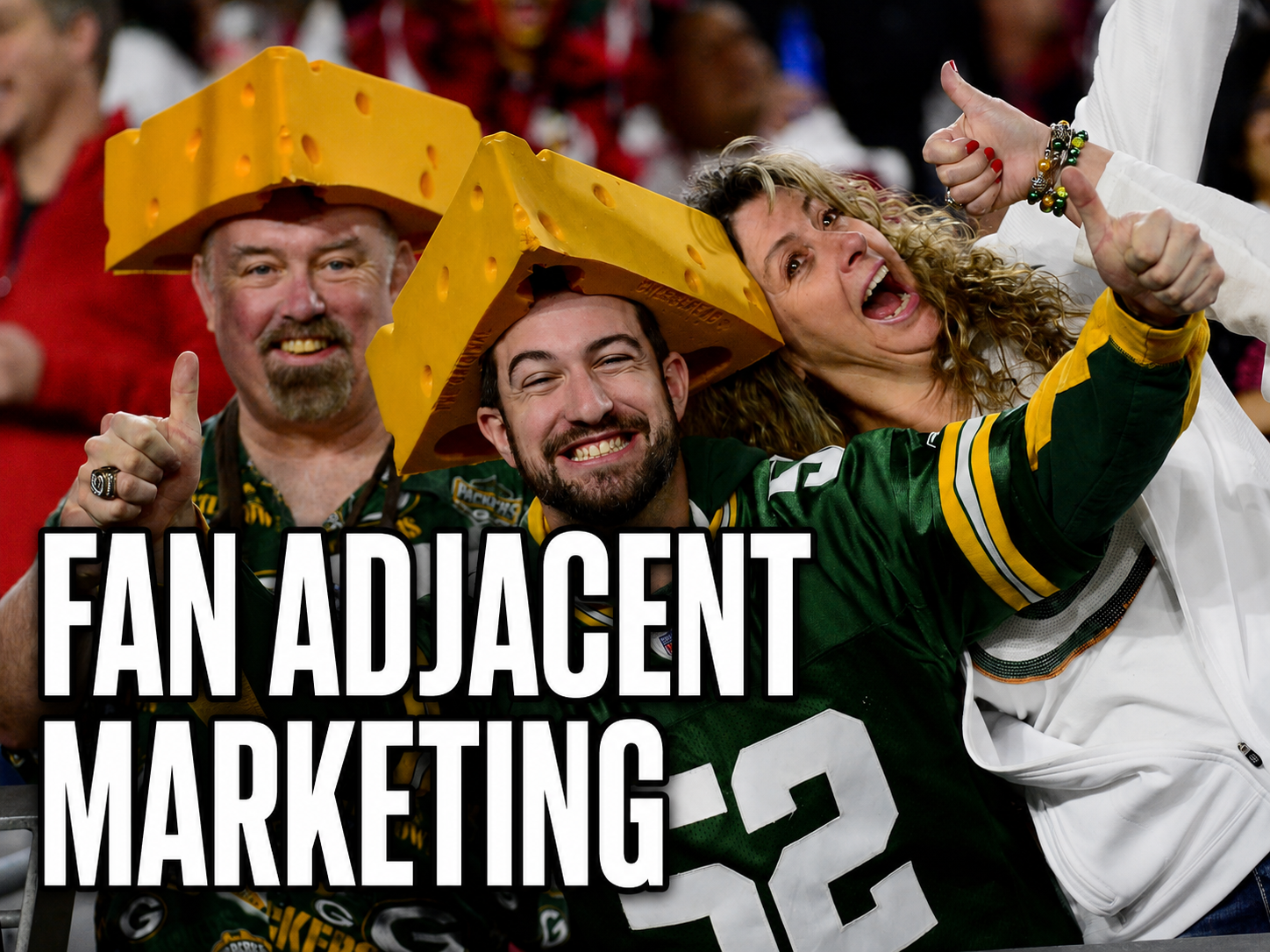
Fan-adjacent marketing is a sports marketing strategy where brands activate athletes, grassroots creators, and community voices around the emotional edge of live sports: tailgates, watch parties, fan zones, training sessions, tournament weekends, campus rivalries, and local sports moments. Instead of relying only on static logo exposure or one macro-celebrity endorsement, brands use credible people close to the fan experience to create content that feels native to the moment.
This matters because sports attention is fragmenting. Fans still care deeply about the game, but their experience now stretches across live events, social feeds, group chats, creator breakdowns, athlete stories, and community rituals. The brands that win are not just visible around sports. They participate in the culture surrounding sports.
Why are brands shifting from sponsorship visibility to fan participation?
Traditional sponsorship can still create reach, but reach alone is not the same as relevance. A logo on a board, jersey, broadcast read, or event backdrop may make the brand present. It does not automatically make the brand part of the conversation fans actually want to share.
That is the opening for fan-adjacent playbooks.
A fan-adjacent strategy asks a different question: where is the real emotional energy around this sports moment, and who can credibly capture it?
That might mean college athletes filming first-person product use around a training session. It might mean grassroots creators covering the atmosphere outside a tournament. It might mean athletes, teams, or community voices producing content around watch parties, pregame routines, campus moments, local rivalries, or postgame reactions.
The practical shift is from buying attention near the game to building content with people who already have trust inside the fan environment.
What does fan-adjacent marketing look like in practice?
A brand does not need to own official broadcast rights or sponsor the largest property to create useful sports content. It needs the right creators, the right guardrails, and the right workflow.
A simple fan-adjacent athlete influencer marketing campaign might include:
- Recruiting athletes whose sport, school, audience, and content style match the brand’s target fan base.
- Giving each athlete a clear creative brief without over-scripting the post.
- Capturing content in real sports contexts: gyms, practices, pregame routines, campus events, watch parties, fan zones, or training sessions.
- Reviewing posts for claims, usage rights, brand safety, and NIL Deals requirements before they go live.
- Measuring engagement, content quality, athlete fit, and reusable creative performance after the campaign.
The best versions feel close to the action without pretending to be official game coverage. They show what fans care about around the sport: anticipation, ritual, community, identity, performance, and belonging.
How do athlete influencers fit into fan-adjacent playbooks?
Athlete influencers are especially useful because they sit at the intersection of performance, credibility, and community. They are not just creators commenting from the outside. They are participants in the sports environment.
For brands, that creates three advantages:
1. Credible context. Athlete content can make a product feel connected to a real sport, training routine, campus community, or fan moment.
2. Local relevance. College athletes often have concentrated communities around schools, sports, conferences, and regional fan bases.
3. Content variety. A distributed athlete network can produce many perspectives on the same campaign theme, rather than one polished asset that has to carry the entire idea.
That does not mean every athlete post will outperform every traditional ad. It means the channel gives brands a more authentic way to show up in sports culture when the campaign is structured well.
What workflow do brands need before scaling this?
Fan-adjacent marketing can look casual on the surface, but it needs operational discipline underneath. The more decentralized the creator network becomes, the more important the workflow becomes.
Before launch, brands should define:
- Audience fit: Which fan communities, schools, sports, geographies, or moments matter?
- Athlete criteria: Which athletes are credible for the product and the fan context?
- Creative guardrails: What must be included, what should be avoided, and where should athletes have freedom?
- Rights and usage: Can the brand reuse the content in paid media, organic social, email, retail, or landing pages?
- Approval owners: Who reviews captions, claims, visuals, product mentions, and brand-safety issues?
- Measurement: Which metrics matter: impressions, engagement rate, clicks, content volume, usable creative, affiliate outcomes, paid-media efficiency, or qualitative feedback?
Without that structure, fan-adjacent campaigns become scattered. Posts live in different inboxes. Revisions get lost. Claims are hard to review. The brand cannot tell which athletes, formats, or moments are actually working.
Our point of view: the creative should feel native, but the operating system should be precise.
What proof point shows this model working?
Our EDGE athlete content engine case study is a useful example. EDGE wanted authentic Instagram Reels from athletes using its Shoe Grip product in credible gym and training settings. The goal was not to produce overly polished ad creative. The campaign focused on real first-use reactions, athlete testing, and natural performance storytelling.
We helped EDGE activate 22 new athlete brand ambassadors and generate 80,118 organic impressions, 3,226 total engagements, and a 4.0% average engagement rate. The public case study also notes that the campaign was 142% more engaging than industry average.
That proof point matters for fan-adjacent marketing because it shows the balance brands need: authentic athlete content on the front end, and a structured recruitment, approval, and distribution workflow behind the scenes.
What do teams often misunderstand about fan-adjacent marketing?
The first misconception is that fan-adjacent means unstructured. It does not. The content may look spontaneous, but the campaign should still have clear deliverables, deadlines, approvals, rights, and measurement.
The second misconception is that brands need to force creators into polished brand scripts. That usually weakens the reason to use athletes or grassroots creators in the first place. The stronger approach is to define the must-haves, then give creators room to express the moment in their own language.
The third misconception is that brands can bypass rights restrictions by using creators. They should not. Fan-adjacent content should avoid unauthorized game footage, league assets, or claims that require rights-holder approval. The safe lane is original creator content around the culture, preparation, community, and experience surrounding the sport.
In Summary
- Fan-adjacent marketing helps brands participate in sports culture, not just appear beside it.
- Athlete influencers are valuable because they bring credible context, local relevance, and distributed content creation.
- The strongest campaigns combine authentic creator output with disciplined workflows for briefing, rights, review, and measurement.
- Customer-specific performance claims should stay tied to public proof points, such as the EDGE case study, and receive human review before publication.
FAQ
What is fan-adjacent marketing?
Fan-adjacent marketing is a strategy where brands create content around the communities, rituals, creators, athletes, and emotional moments surrounding live sports rather than relying only on official sponsorship placements or celebrity endorsements.
How can brands use athlete influencers around live sports?
Brands can recruit athletes whose sport, school, audience, and content style match the target fan community, then give them clear creative guardrails to capture authentic content around training, campus moments, game-day rituals, watch parties, or tournament periods.
Does athlete-based content deliver higher engagement than regular brand content?
It can, but the claim should be tied to specific campaigns and proof points. In the public EDGE case study, athlete-led content generated 80,118 organic impressions, 3,226 engagements, a 4.0% average engagement rate, and engagement 142% above industry average.
What should brands avoid in fan-adjacent campaigns?
Brands should avoid over-scripting creators, making unsupported results claims, using unauthorized rights-holder assets, or launching decentralized creator programs without a workflow for approvals, usage rights, and measurement.