How Many Micro and Nano Athletes Do You Need for a Meaningful NIL Campaign?
A meaningful micro- or nano-athlete campaign usually needs enough roster volume to cover the schools, sports, regions, and audience niches you care about, not just one recognizable creator with a large follower count. The practical answer is this: choose the smallest roster that gives you repeated local reach, enough content to test, and enough performance signal to learn what is working.
That is why micro and nano roster volume matters. In NIL Deals and Athlete Influencers programs, the value of smaller creators often comes from coordinated density: many trusted voices showing up in relevant communities at roughly the same time, with clear deliverables and a workflow that keeps the campaign manageable.
What does micro and nano roster volume mean?
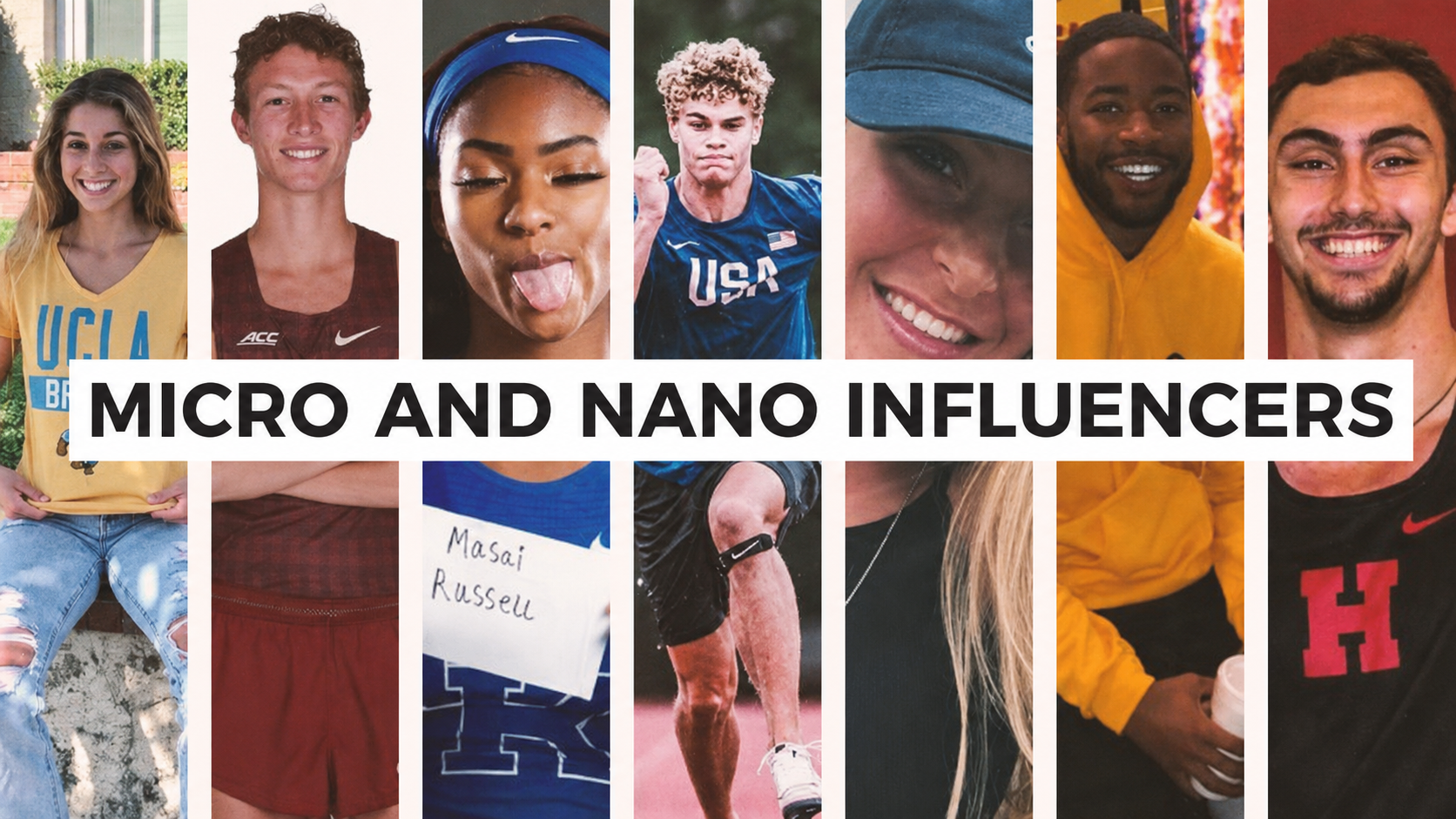
Micro and nano roster volume is the number of smaller, targeted creators you activate in a campaign so your brand can reach multiple communities instead of relying on one oversized audience.
In a college NIL context, that roster might include athletes across several schools, sports, conferences, cities, or audience niches. A national beverage brand might need volume across campuses. A local restaurant group might need a smaller roster concentrated around one market. A consumer app might need athletes who reach different student segments: first-year students, Greek life, gym communities, tailgate audiences, women’s sports fans, or campus creators with strong video engagement.
The important distinction is that roster volume is not simply “more athletes.” It is planned coverage. You are deciding how many athlete creators you need in order to create enough relevant impressions, content, and learning loops for the campaign goal.
Why is one superstar creator a different strategy?
A single premium creator can be useful when your goal is broad awareness, celebrity association, or one tentpole asset. But that is not the same operating model as a micro or nano campaign.
A micro/nano strategy is built around distributed trust. Smaller creators often have more specific communities, more direct audience relationships, and more room for authentic product storytelling. Sprout Social’s overview of micro-influencer marketing describes micro-influencers as creators with roughly 10,000 to 100,000 followers whose audiences are often more targeted and engaged than larger, more passive audiences. That is useful context, but it also points to the operational challenge: one small creator rarely creates enough reach or learning on their own.
The strategic mistake is buying one smaller creator and expecting the campaign to behave like a scaled channel. If your campaign depends on localized trust, you need enough creators to make that trust visible across the communities you care about.
How should you size a micro or nano athlete roster?
Start with the campaign job, not the follower count.
1. Market coverage
Ask where the campaign needs to show up. If the goal is regional awareness, your roster should map to the target markets. If the goal is campus adoption, your roster should map to the schools where you want conversation. If the goal is a national product seeding program, your roster may need representation across many schools and sports.
A simple planning question: if this campaign worked, where would we expect to see people talking about it?
2. Audience niche coverage
The same school can contain several different audiences. A volleyball athlete, a football walk-on, a wellness creator, and a student-athlete with a strong Greek life following may all reach different campus communities.
Micro and nano roster volume gives you the ability to cover those differences intentionally. You are not just adding headcount; you are building an audience map.
3. Content output
Roster size also determines content volume. If 20 athletes each create one post, you have a different learning environment than if 100 athletes each create three pieces of content over several months.
Content output matters because Influencer Marketing is rarely perfect on the first asset. You need enough creative variation to understand which hooks, formats, markets, and athlete profiles produce the strongest response.
4. Operational capacity
The best roster size is not always the largest possible number. It is the largest number you can manage well.
Every additional athlete adds outreach, contracting, product shipment or offer fulfillment, content instructions, approval steps, usage rights, posting windows, tracking links or codes, and reporting. If the workflow is weak, volume creates chaos. If the workflow is strong, volume creates leverage.
What does a practical roster-volume framework look like?
Use a simple three-layer model.
Core roster
This is the group you expect to produce the most reliable content. They are strong fits for the product, the campaign goal, and the audience. Your core roster should be small enough to manage closely but large enough to create consistent output.
Coverage roster
This group expands reach across schools, regions, sports, or niches. Coverage athletes may not all be the biggest creators, but they help the campaign feel present in more of the communities that matter.
Test roster
This group helps you learn. You might test new schools, sports, creative hooks, content formats, or audience segments. The goal is not to treat every test as a final bet; it is to find repeatable patterns before you scale spend.
This framework is especially useful for NIL Deals because athlete audiences are not interchangeable. A roster plan should reflect geography, sport, seasonality, content style, audience fit, and the brand’s actual campaign objective.
How does volume avoid becoming chaos?
Volume only works when the workflow is designed before the campaign launches.
At minimum, a high-volume micro/nano campaign needs:
- a clear brief that explains the product, audience, talking points, and content do’s and don’ts
- a defined deliverable structure, including post type, timing, usage rights, and revision expectations
- a fulfillment plan for products, codes, links, or event details
- a content approval process that does not rely on scattered DMs and spreadsheets
- tracking links, discount codes, or reporting fields where relevant
- a review cadence that separates creative learning from operational follow-up
Our POV is that micro and nano roster volume should be treated as a system, not a scramble. The point is not simply to recruit more athletes. The point is to make a larger athlete roster executable, measurable, and useful.
What can a scaled athlete program look like in practice?
The clearest public example is our Liquid I.V. scaled athlete influencer program. In that six-month program, we sourced 4,115 brand ambassadors from 373 schools and 41 sports. The program delivered 10,965 pieces of UGC and an estimated 101 million impressions.
That example is not a promise that every campaign should recruit thousands of athletes or expect the same outcome. It is proof of the operating principle: when the goal is broad Gen Z awareness and content delivery, the roster has to be large enough to create meaningful coverage, and the workflow has to be strong enough to coordinate the moving pieces.
The Liquid I.V. program also shows why volume is not just media math. The campaign required recurring athlete participation, content delivery, product restocks, post approvals, school and sport diversity, and ongoing coordination. That is the difference between a big list of creators and a working athlete influencer program.
When should a brand choose fewer athletes?
A smaller roster can be the right choice when the campaign needs deep storytelling, premium production, event appearances, or close collaboration with a few highly specific athletes.
You may want fewer athletes when:
- the product requires detailed education or compliance review
- content quality matters more than content quantity
- the campaign depends on a specific athlete identity or sport
- the budget needs to support paid media boosting or production
- the team does not yet have the workflow to manage a larger roster
Micro and nano roster volume is not a universal answer. It is a strategy for campaigns where distributed trust, local relevance, content output, and testing matter more than one large creator moment.
How should you measure whether the roster is large enough?
A roster is large enough when it gives you useful signal against the campaign goal.
For awareness, look at reach, impressions, frequency, school or market coverage, and content delivery. For engagement, look at saves, comments, shares, click-throughs, and audience quality. For content strategy, look at which creator profiles and creative formats produce the strongest assets. For sales-oriented programs, review codes, links, landing-page behavior, and post-campaign customer quality carefully.
The key is to measure the roster as a portfolio. One creator may overperform. Another may underperform. The campaign should still teach you which athlete segments, markets, and message angles deserve more investment next time.
In Summary
- Micro and nano roster volume means activating enough smaller athlete creators to cover the communities, schools, regions, and audience niches that matter to your campaign.
- One premium creator and a high-volume micro/nano roster are different strategies; the first concentrates attention, while the second distributes trust.
- The right roster size depends on market coverage, audience niche coverage, content output, testing needs, and operational capacity.
- Volume without workflow creates chaos; volume with clear briefs, approvals, fulfillment, tracking, and reporting creates leverage.
- Our Liquid I.V. example shows how scaled athlete influencer operations can support broad awareness and content delivery, but the metrics should be used as a public proof point, not a universal benchmark.