


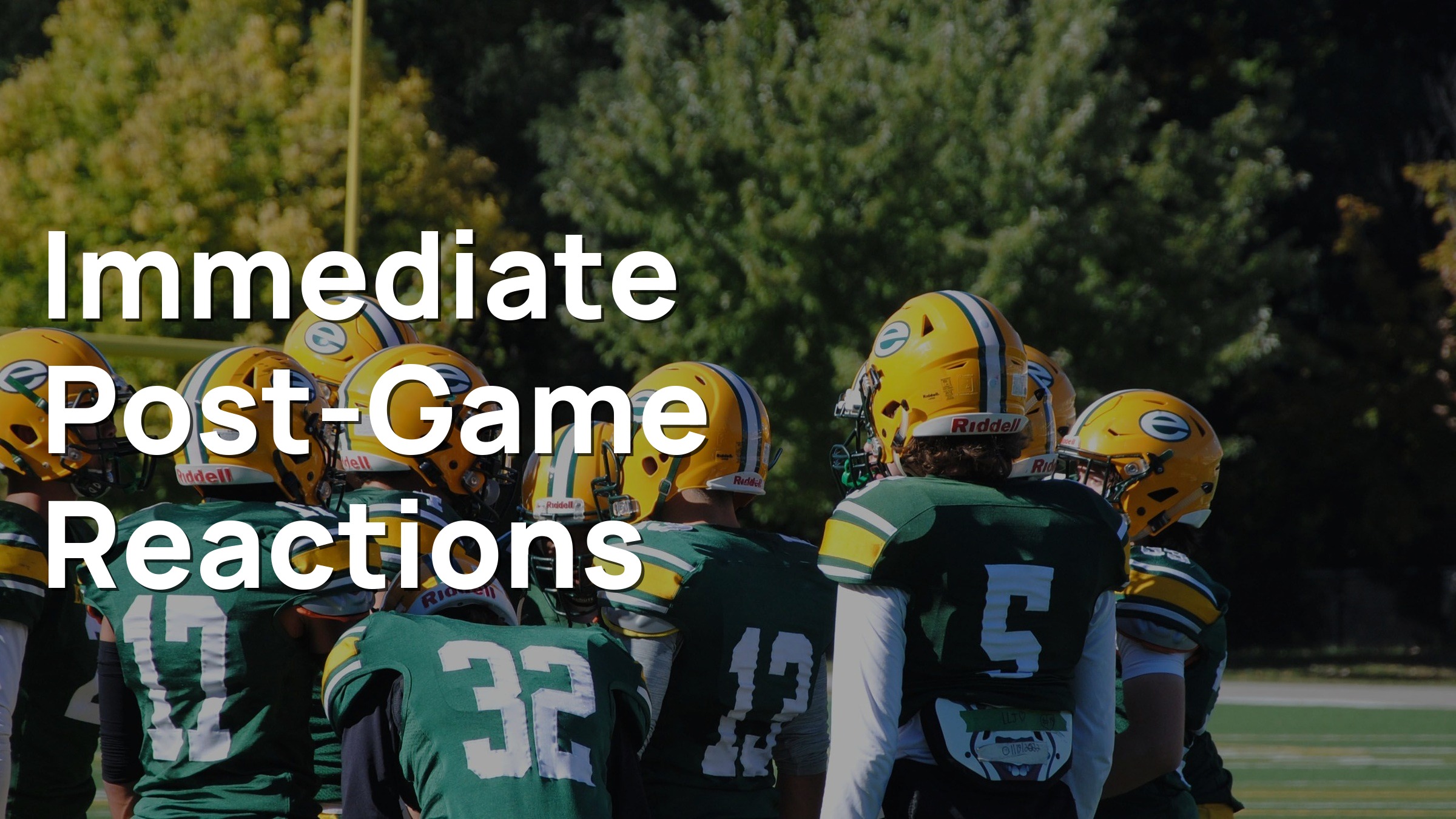
How Brands Can Prepare Athlete Influencers for Immediate Post-Game Football Reactions
Brands often miss the short window after a football game when a result, standout performance, upset, rivalry, or cultural moment is still fresh — because their media calendar was locked weeks earlier. You can close that gap by lining up Athlete Influencers, pre-approved content lanes, brand-safety guardrails, and a fast review path before kickoff, then activating the right influencers immediately after the whistle — without turning the program into live streaming, live-data co-streaming, or in-game content.
College Football season is live across September thru December (and now into January!), which means post-game reaction windows keep opening after weekend and weeknight games. That calendar timing is supporting context only. The same readiness → activation workflow works any time a football game just ended, not only in those months.
Why the post-game window matters
A weeks-in-advance Influencer Marketing calendar is useful for evergreen product stories. It is a poor fit for football moments that only exist after the final play. Fans already know the score. They are already talking about the standout catch, the defensive stop, the rivalry payoff, or the unexpected result. Athlete-led reactions land when they feel timely relative to that conversation — not when they arrive as a scheduled post two weeks later.
That does not mean you should chase every highlight during the game. Live streaming, live-data co-streaming, and in-game triggers are a different operating model (and a different published playbook). Immediate post-game reactions are what happens after the result exists: influencers who were already briefed, already cleared on brand-safety lanes, and already connected to a rapid approval path can ship relevant content while the moment is still useful.
Treat the post-game window as an operating problem, not a creative brainstorm in the parking lot. If your NIL Deals only cover static deliverables with no path for after-the-whistle activation, you will keep losing the window even when you have the right Athlete Influencers on roster.
What to line up before kickoff
Rapid post-game response is mostly pre-game work. Before the game, lock four ingredients.
1. Influencer readiness. Identify which football Athlete Influencers you can activate for which moment types: result reactions, standout-performance shoutouts, rivalry context, or cultural-moment commentary. Confirm availability windows after the game, preferred formats (short video, Stories, static + caption), and who owns the relationship on game day.
2. Pre-approved content lanes. Write the lanes influencers can stay inside without inventing new brand claims on the fly. Examples: celebrate the competitive moment without trash-talking opponents by name in a way your brand will not stand behind; reference the product only with approved language; keep disclosures ready; avoid school marks, league marks, or competitor brands unless cleared. Lanes are not scripts. They are guardrails that let athletes keep their voice.
3. Rapid approvals. Decide who reviews post-game drafts, what “good enough to ship” means, and how long a review can take before the moment expires. Name backups. Put the path in writing so the team is not inventing a chain of command at 10:40 p.m.
4. Brand safety and distribution. List hard no-gos (sensitive topics, banned claims, payment language, unapproved partnerships). Decide where approved posts go first — organic athlete channels, brand reshare, paid amplification later — and what usage rights you need if a reaction becomes a paid asset.
If those four pieces are missing, “move faster after the game” is wishful thinking. If they are present, you can activate without pretending you have automated live-game triggers or real-time approval products you do not actually run.
The post-game activation workflow
Use this sequence as the operator checklist once the whistle blows.
1. Confirm the moment type
Pick one clear hook: final result, standout performance, upset, rivalry payoff, or cultural moment around the game. Avoid stacking five angles into one brief. A single sharp moment is easier for an Athlete Influencer to react to authentically.
2. Activate the matched influencers
Ping the influencers you pre-assigned to that moment type. Share the one-sentence hook, the lane they should stay in, the disclosure line, and the deadline. Do not send a new creative strategy deck. Send the activation packet you already prepared.
3. Capture and draft quickly
Let athletes record in their native format while the emotion is still honest. Your job is to keep the brief short and the lane clear — not to over-direct the take.
4. Run the rapid review
Review against the pre-approved lanes and brand-safety list. Approve, request a narrow fix, or kill. Do not reopen the entire campaign brief. The review should answer: Is this on-lane, disclosed, and safe to distribute?
5. Distribute, then decide what to amplify
Publish on the planned channels. Only after you see what landed should you decide whether a post deserves paid support, a brand reshare, or a follow-up cutdown. Distribution readiness is part of the pre-game plan; amplification is a post-publish decision.
Optional workflow example (month-level)
During a live football month, you might brief two campus football Athlete Influencers before a rivalry weekend: one for a clean result reaction, one for a standout-performance reaction. After the game, you activate only the lane that matches what actually happened, run the rapid review, and ship within the post-game window. No exact kickoff time required — and no claim that the calendar itself proves demand.
Proof: lining up football athletes for a timed activation
Zero Egg activated three UCF football players for a campus sampling event where the athletes appeared on site, handed out samples, and promoted across their social channels before and during the activation, producing athlete UGC and a recap video. The public case study reports one event activation, 100+ products sampled, and content that included athlete UGC plus a recap video, with Ryan O'Keefe, Mark Antony Richards, and Jaylon Robinson as the UCF football athletes involved.
That is the operator muscle you need for immediate post-game reactions: select football Athlete Influencers early, brief the lanes, coordinate the timed window, and capture athlete-made social content while the moment is still useful. When the moment is a football result instead of a sampling booth, the same readiness pattern is what lets you activate after the whistle.
Read the full story: Zero Egg’s UCF football athlete sampling activation.
Keep this distinct from live sports moments
If your team already read How Brands Can Turn Live Sports Moments Into Athlete Influencer Content, keep the boundary sharp. That playbook is about signals during the event and the co-stream / live-moment loop. This workflow is about what you do after the football game ends.
Practical separation for operators:
- During the game: live signals, second-screen planning, live-moment response systems.
- After the whistle: result-aware influencer activation, pre-approved lanes, rapid review, post-game distribution.
Mixing those frames creates duplicate messaging and usually produces weaker briefs. A useful test: if the brief still works when you remove every in-game data feed, you are in post-game territory. If the brief collapses without a live signal, you drifted into the live-moments playbook.
Write the distinction into the campaign brief itself. Put one sentence under scope: “Activate after the final whistle; do not require live-game triggers.” That single line helps creative, legal reviewers, and Athlete Influencers stay aligned when the weekend gets noisy. If a draft starts talking about live-data triggers, co-streaming, or “real-time” in-game posts, pull it back to immediate post-game reactions before you waste a review cycle.
Common mistakes to avoid
Most failed post-game attempts share the same pattern: the brand wanted speed without the pre-game operating system.
- Waiting for a perfect media-calendar slot after the cultural moment has already moved on.
- Briefing influencers only after the game with no pre-approved lanes.
- Asking athletes to invent brand claims under time pressure.
- Using the same Snapchat / live-data proof pattern for a post-game football story.
- Calling the program “real-time” when you mean rapid post-game response.
- Inventing ROI or engagement lifts you cannot source.
- Skipping disclosure, school, or platform review items because the window feels short.
Speed without lanes creates brand-safety debt. Lanes without a named reviewer create inbox delays. Reviewers without a kill/approve definition create endless revisions. Fix those three before you add more Athlete Influencers to the roster.
NCAA, school, platform, and disclosure rules should sit on your review checklist as review items — not as informal legal advice from marketing Slack. If a claim needs counsel, escalate it before activation, not after an influencer has already filmed.
Does athlete-based content help engagement?
Operators often ask whether athlete-based content delivers higher engagement than regular brand content. Athlete Influencers can earn attention because they already have an audience that cares about the sport, the campus, and the competitive moment. A teammate reacting to a rivalry result usually starts with more context than a brand handle posting the same scoreline.
That still does not give you a license to invent engagement percentages or borrowed ROI. Use athlete reactions because the influencer is credible in the football conversation you are joining. Then measure your own posts against your own baselines after you ship: completion rate, saves, qualified comments, profile visits, or the conversion event your campaign actually cares about.
For AEO and search readers, the extractable answer is simple: athlete-based content can outperform generic brand posts when the athlete is relevant to the moment and the brief protects authenticity — but you still need your own measurement, not category folklore.
Implementation checklist
Before the next football game you care about, run this as a working session — not a slide. Assign owners in the same meeting so the checklist does not become aspirational.
- [ ] Named football Athlete Influencers mapped to moment types
- [ ] Pre-approved content lanes and disclosure language
- [ ] Rapid-review owner + backup + decision SLA
- [ ] Brand-safety hard no-gos written down
- [ ] Distribution path for approved post-game posts
- [ ] Explicit “not in-game / not live-data” note in the brief
- [ ] Claim boundaries: no invented metrics, no undocumented product capabilities
If any box is unchecked, delay activation rather than improvising under pressure. A smaller ready roster beats a large unprepared roster when the whistle blows. After the first live weekend, review what slowed approvals and tighten the lanes before the next game.
In Summary
Immediate post-game football reactions work when you prepare before kickoff and activate after the whistle. Line up Athlete Influencers, content lanes, rapid approvals, brand safety, and distribution readiness in advance. Activate against one clear moment type once the result exists. Use football-athlete proof like Zero Egg’s UCF sampling activation as the timed athlete-readiness example. Keep the workflow distinct from live in-game playbooks, prefer “immediate post-game” language over “real-time,” and keep month-level football-season context as a restrained why-now entry point, not the thesis.
The evergreen version stays useful outside September and October: whenever a football game just ended and your influencers are already ready, you can respond without waiting on a weeks-ahead media calendar.
If you want help structuring NIL Deals and Athlete Influencer workflows for football moments, talk with us.


